
Acute Respiratory Distress Syndrome (ARDS)
Herald Therapeutics is focused on advancing treatments for ARDS and other cardiopulmonary indications, including Infant Respiratory Distress Syndrome (IRDS) and acute heart failure.
Historically, up to 50% of patients with severe ARDS do not survive.
ARDS lungs have low thyroid hormone
Normal lung function depends on thyroid hormone. The lung is a target organ for triiodothyronine (T3), and lung cells express transporters that allow T3 to enter and regulate cellular function.
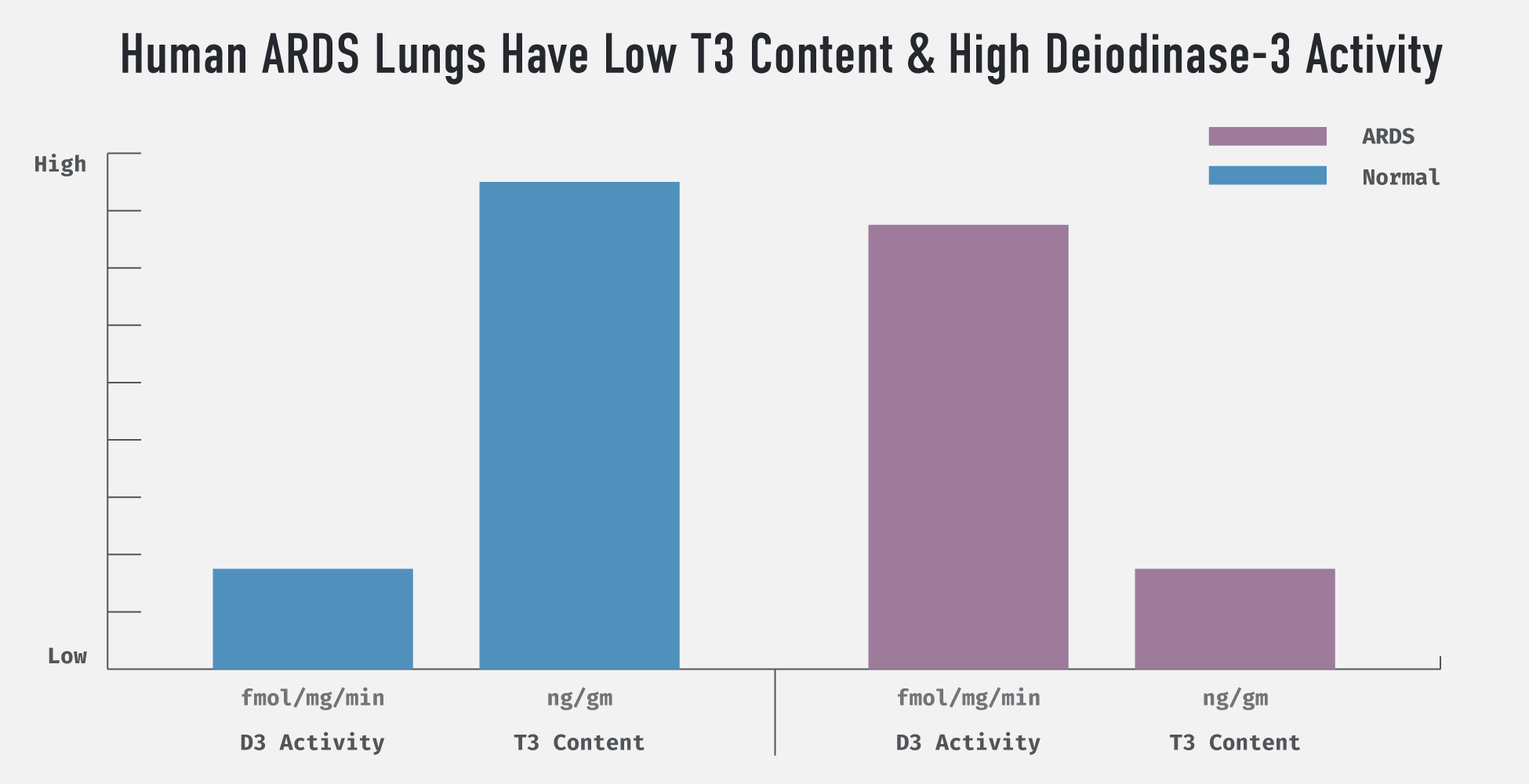
ThyrOxy is designed to replenish lung T3 and restore lung function.
Learn more about how ThyrOxy works.
About ARDS
-
ARDS is a type of sudden onset severe lung failure that usually requires treatment in an ICU with a mechanical ventilator. ARDS has a high mortality rate, is triggered by many causes, and can occur in otherwise healthy people.
-
The lung becomes widely inflamed and filled with fluid (pulmonary edema) making it difficult to get oxygen into the blood. Some patients develop lung scarring and require support from a ventilator for weeks.
-
There are more than 100 causes of ARDS. Common causes include:
Pneumonia
Aspiration/near drowning
Lung transplant
Massive blood transfusion
Thermal/smoke inhalation
Toxin/drug inhalation
Chest trauma
Chest radiation therapy
Bloodstream or systemic infection
-
Profound hypoxemic respiratory failure (very low blood oxygen level) requiring prolonged mechanical ventilation because of decreased gas exchange and increased work of breathing. Survivors often face long-term impacts, including permanent pulmonary fibrosis (scarring), debilitating muscle weakness, cognitive impairment, depression, and PTSD.